Scaling Key Access Across Cities: Smart Locks, Backup Entry, and Vendor SLAs
Short-term rental hosts rarely think of door codes as a growth system. Yet once you have homes in different cities, access becomes one of the first things that can limit you. When keys, lockboxes, and random apps pile up, it gets harder to protect reviews and harder to sleep at night, especially during busy fall and holiday travel.
In this article, we will walk through how to treat access like an operating system for your portfolio. We will cover smart locks, backup entry plans, and vendor agreements so your Airbnb key management service goes from constant stress to quiet, predictable background work.
Turning Door Codes Into Scalable Profit Systems
Many multi-home hosts know the pain. A guest is locked out at midnight, a cleaner cannot get into a condo with a building fob, and a handyman is stuck at a gate waiting for a code that only lives in one person’s phone. Multiply that across Miami, Broward County, Georgia, the Carolinas, and it feels like a full-time job.
When access is messy, it:
- Leads to poor reviews from frustrated guests
- Eats into your time with late-night calls
- Limits how many homes you feel safe adding
The shift is to stop treating access as a random set of codes and keys and start treating it as a structured system. Standard hardware, clear backup plans, and tight vendor agreements turn doors into something you barely think about.
A design-forward, end-to-end management partner can carry that load for you, building one access playbook that works across different homes and markets so you can expand with confidence.
Why Access Breaks First When You Scale Across Cities
Keys feel simple when you start with one property. A lockbox here, a spare with a neighbor there, a random smart lock someone recommended. It works, until it does not.
Here is why one-off fixes fall apart as you grow:
- Every home ends up using different hardware and apps
- Vendors cannot support all the different setups
- No one has a clear, current list of who can access what
Local rules add another layer. Some buildings require fobs, some require guests to be registered, and some HOAs have strict rules about visible lockboxes. When each property has its own unwritten system, your team and vendors are always guessing.
Peak seasons raise the pressure even more. Fall events, snowbirds coming in, and families traveling for holidays mean:
- More late arrivals and early departures
- Larger groups arriving at odd hours
- More chances for missed instructions and lockouts
Every lock problem pulls you back into operations: answering your phone in the middle of the night, chasing a locksmith, manually resetting codes across multiple apps. That drag on your time is what stops many owners from adding more homes.
Designing a Standardized Smart Lock Stack Across Markets
To scale across cities, you need one main smart lock setup that works in most cases, with clear rules for the exceptions.
When you choose a primary smart lock, look at:
- Battery life and low-battery alerts
- Keypad reliability in heat, humidity, and storms
- Whether it works with Wi-Fi, a hub, or both
- Compatibility with your Airbnb key management service tools
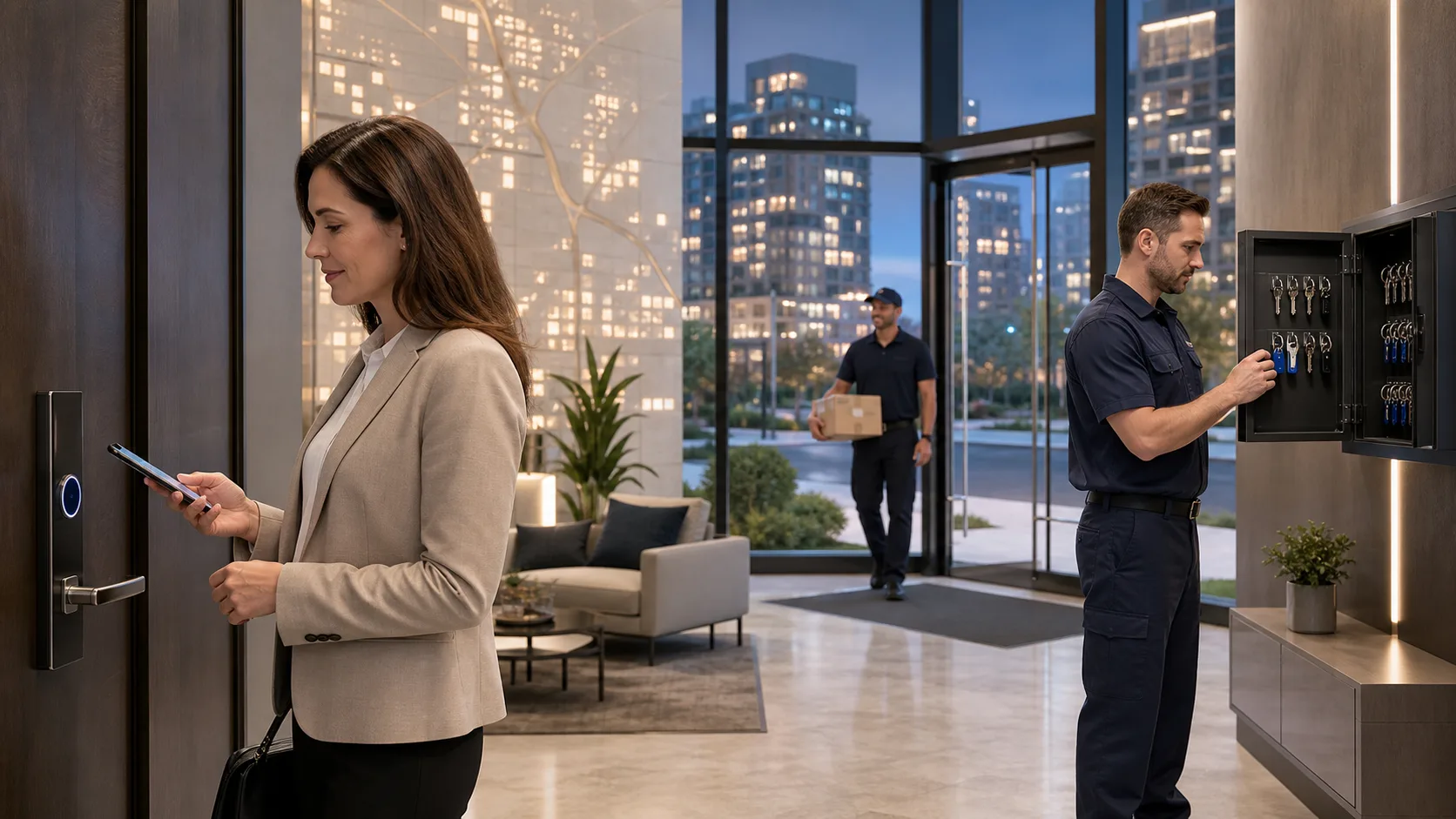
Next, centralize access control. Instead of jumping between different apps, aim for one platform that:
- Creates unique guest codes automatically
- Sets start and end times that match reservations
- Gives cleaners and vendors their own stable codes
- Lets you see all active codes across all homes
Build in redundancy from day one. Wi-Fi will go out. Batteries will die. Doors will swell or shift, especially in coastal areas. Plan for that with:
- Local keypads that work even when the app is down
- Offline codes when internet is spotty
- A simple mechanical key or override that trusted people can reach
Finally, create a rollout playbook. For example, you might:
- Start with single-family homes in one city
- Map every door, lock type, and firmware in a shared document
- Train your internal team and cleaners on the new process
- Then move the same system to condos and townhomes in your next market
Doing this before the busy holiday stretch makes your high-demand season much smoother.
Backup Entry Protocols That Prevent Late-Night Emergencies
Even the best smart lock systems need backup.
Set a layered access strategy for every listing:
- Primary: main smart lock and keypad
- Secondary: lockbox or hidden mechanical key with limited access
- Building or garage: a clear method for gates, lobbies, or elevators
Standardize how you handle lockouts. Your playbook might include:
- Verify the guest and reservation details.
- Walk them through basic steps like checking the code, timing, and keypad.
- Issue a short-term override code if needed.
- If remote options fail, send a local vendor based on pre-set rules.
Guest instructions also matter. Late at night, tired travelers miss small details. Make check-in guides:
- Visual, with door and keypad photos
- Clear about where to park and how to reach the right entrance
- Simple, with a short backup section if the code does not work on the first try
Once a year, stress-test your system before your busiest period. Run a few “dry run” lockouts with your team:
- Pretend Wi-Fi is down and see what still works
- Time how long it takes to reach the backup key
- Check how quickly vendors answer and respond
Fix the weak spots while you still have room between bookings.
Vendor SLAs That Keep Access Running Smoothly
Locks and codes are only as strong as the people who support them on the ground.
Set clear service level agreements, or SLAs, by city with:
- Locksmiths
- Handymen
- Building or HOA contacts when needed
Spell out expectations like:
- Urgent lockout response time
- Non-urgent repair timeframes
- How far in advance to book new installs or upgrades
Make sure vendors understand your lock stack. They should know:
- Which smart lock models you use most
- Which platform manages the codes
- Your standards for code changes and guest privacy
Require simple but consistent documentation. For every lock visit, vendors should provide:
- Photos of the door and lock after work is done
- A short summary of what they changed or fixed
- Any new codes or settings, recorded in your central system
Do not forget peak-period coverage. Confirm who is actually available during major holidays and local events. Lockouts happen when demand is highest, so you want no surprises when everyone is busy.
When to Turn Access Over to a Professional Partner
At some point, the access puzzle becomes too big to run off your own phone.
Common signs you are at that point include:
- More than a handful of homes across different states
- Recurring self-check-in questions and confusion
- A growing number of off-hours calls to vendors
When you look at an Airbnb key management service or full-service partner, focus on:
- Experience handling multi-city portfolios
- Comfort with smart locks and access platforms
- Ability to connect access with cleaning schedules and on-site support
At Tangy Management, we approach access as part of the full guest and owner experience. We standardize hardware where it makes sense, manage codes from a central system, and hold vendors to clear SLAs, across markets like Miami, Broward County, Georgia, and the Carolinas. We keep testing and refining so that doors simply work, even when guests arrive late in busy seasons.
The benefit to owners is simple. With access under control, you spend less time solving emergencies and more time growing your portfolio and improving the design and feel of each home. Your doors stop being a daily worry and start being one of the quiet engines behind your revenue.
Streamline Your Hosting With Hassle-Free Key Management
If you are ready to save time and avoid late-night key handoffs, our Airbnb key management service is built to handle every guest arrival smoothly. At Tangy Management, we coordinate access so your guests check in easily and you stay focused on growing your income. Share a few details about your property and we will show you how we can simplify your hosting routine. If you have questions before getting started, you can contact us for more information.